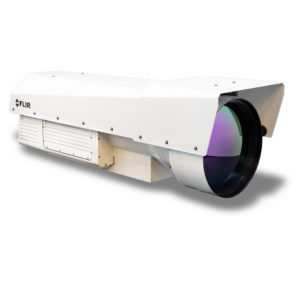
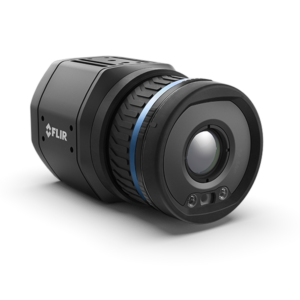
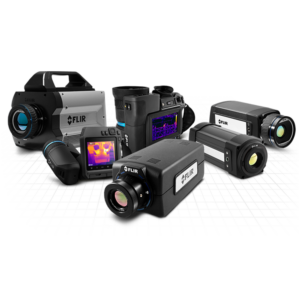
Thermal imaging has emerged as a transformative technology across multiple scientific disciplines, offering a non-invasive and highly accurate method for detecting and analysing temperature variations. This technology is now playing a pivotal role in medical diagnostics, environmental monitoring, industrial applications, engineering solutions, and more. By detecting infrared radiation and converting it into temperature data, thermal cameras allow researchers to visualise heat patterns, detect anomalies, and improve efficiency across various fields. The continued advancements in infrared imaging are unlocking new possibilities for scientific discovery, enhancing our understanding of natural and engineered systems.
The Science Behind Thermal Imaging
Thermal imaging systems operate across different infrared wavelength bands, each serving distinct research and industrial purposes:
-
- Predictive Maintenance – Detecting overheating components before they fail, reducing downtime and operational costs.
-
- Energy Efficiency – Identifying heat loss and insulation weaknesses in buildings to enhance energy conservation strategies.
-
- Fire Safety and Emergency Response – Assisting firefighters in locating individuals through smoke-filled environments and detecting hotspots in fire-prone areas.
The Future of Thermal Imaging in Research and Industry
Thermal imaging continues to expand its role in scientific research, providing real-time, non-invasive, and highly accurate data that enhances our understanding of the natural and industrial world. The technology’s ability to detect and interpret heat patterns is proving invaluable across multiple disciplines, from medicine and hydrology to structural health monitoring and wildlife conservation. With ongoing advancements in infrared technology, thermal imaging is set to play an even greater role in future research and industrial applications.
How Thermal Vision Direct Can Help
As a leader in thermal imaging solutions, Thermal Vision Direct provides state-of-the-art cooled and uncooled thermal cameras for a wide range of research and industrial applications.
To explore how thermal imaging can enhance your research or operations, contact us today and let our team assist you in selecting the most suitable infrared technology for your requirements.
-
- Short-Wave Infrared (SWIR: 0.9–1.7 μm) – Ideal for detecting reflected infrared light, commonly used in materials science and astronomical observations.
-
- Mid-Wave Infrared (MWIR: 3–5 μm) – Well suited for applications requiring sensitivity to subtle temperature differences, such as aerospace research, medical imaging, and wildlife monitoring.
- Long-Wave Infrared (LWIR: 8–14 μm) – Used extensively in industrial monitoring, structural assessments, and predictive maintenance applications.

